
You like your neighborhood, but your house is starting to feel like a compromise. The kitchen is cramped, the bathrooms need updating or the space no longer fits your daily routine. That raises a question many Denver-area homeowners eventually face: should you remodel or move?
The answer depends on what needs to change, what you value about your current home and what each option would actually cost. A renovation can solve a frustrating layout or create more usable space. Moving can address needs that construction cannot, such as a different location, a larger lot or a shorter commute.
Before you start packing or picking out cabinets, take a closer look at the problem you are trying to solve.
Start With What Is No Longer Working
“We need a different house” can mean several things. Sometimes the house is genuinely too small. Other times, the existing space is poorly arranged, unfinished or no longer serving a useful purpose.
Write down the specific issues that make you consider moving. An outdated kitchen is a different problem from needing to live closer to work. Not having a comfortable home office is different from wanting a larger yard.
- Do you need more space, or better use of the space you already have?
- Are the problems concentrated in one or two rooms?
- Does the layout make everyday activities harder than they should be?
- Are you unhappy with the house, the location or both?
- What would have to change for you to want to stay?
That last question is especially useful. If you can describe a realistic renovation that would make you happy in the home, remodeling deserves a closer look. If your answer depends on changing the neighborhood, lot or commute, moving may be the better fit.
When Remodeling May Make More Sense
Remodeling is worth considering when you like where you live and the main frustrations can be addressed within the house.
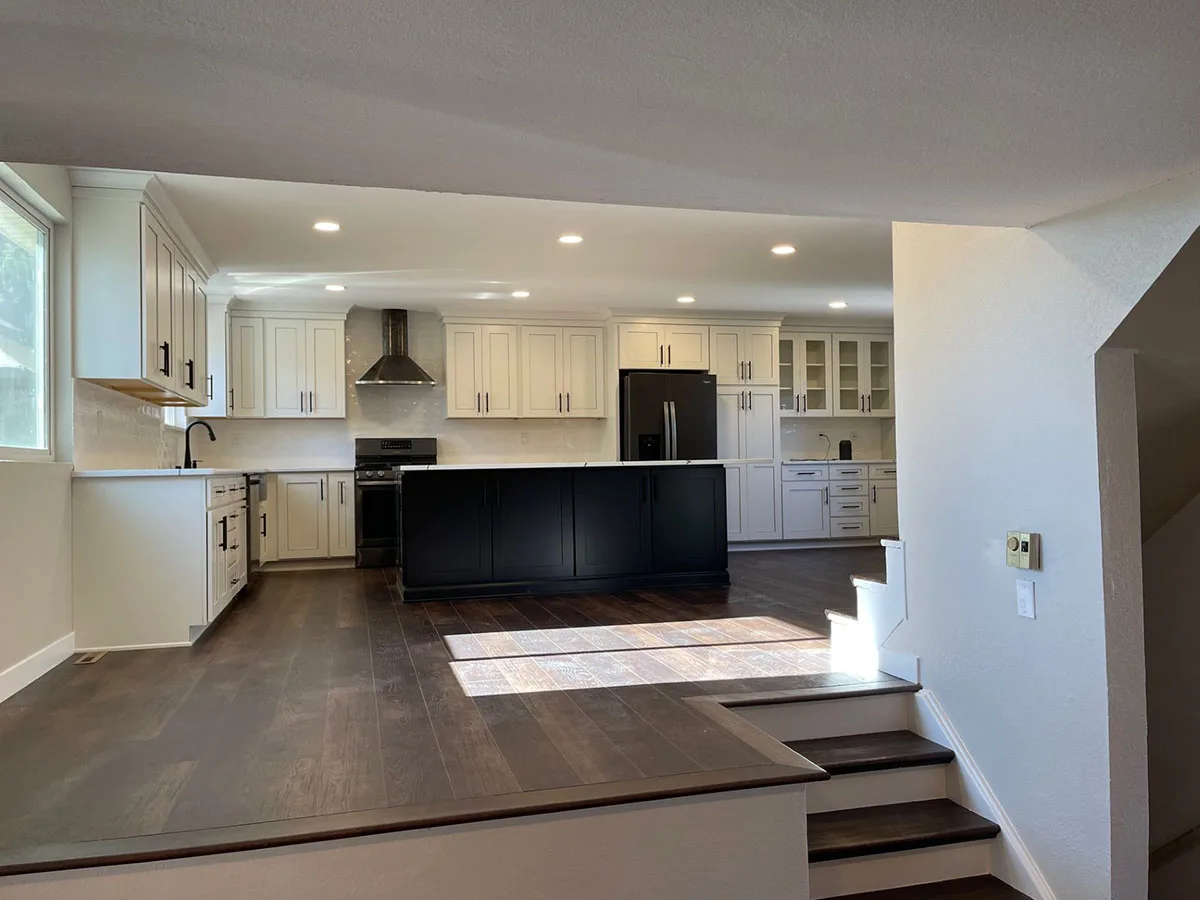
For a homeowner in Aurora who enjoys the neighborhood but dislikes a closed-off kitchen, changing the layout may make daily life much easier. For a Denver-area family using the dining table as an office, finishing usable basement space could create the separation they need without changing addresses.
Projects that may help a home fit your life better include:
- A kitchen remodel that improves storage, work surfaces and traffic flow.
- A bathroom remodel that makes the room more comfortable and functional.
- Finishing a basement for an office, recreation area or other permitted living space.
- Reworking interior walls or doorways to connect rooms more effectively.
- Improving lighting, flooring and storage throughout frequently used areas.
The possibilities depend on the house. Structural conditions, plumbing locations, ceiling heights and permit requirements can affect what is practical. A professional evaluation helps turn an idea into a realistic scope of work.
When Moving May Be the Better Choice
A renovation cannot solve every problem. If you need a different school location, less driving, a larger property or a home closer to family, even an excellent remodel may leave the most important issue unresolved.
Moving may also make more sense if the house would require extensive changes to meet your needs. Adding substantial square footage, relocating several major systems and correcting significant existing problems can turn a simple idea into a much larger investment.
Think about the home you would have after the work is finished. Would it meet your needs comfortably, or would you still be working around major compromises?
If you need one-level living, for example, updating an upstairs bathroom does little to address the stairs you want to avoid. The right decision starts with the result you need.
Compare the Full Cost of Moving
It is easy to compare a remodeling estimate with the price difference between your current house and another property. But that leaves out expenses involved in selling, buying and relocating.
Depending on the transaction, moving costs may include:
- Repairs, cleaning or improvements to prepare your current home for sale.
- Negotiated real estate brokerage fees and other selling expenses.
- Buyer closing costs, lender fees and inspection expenses.
- Moving services, storage or temporary housing.
- Changes in property taxes, insurance and association fees.
- Immediate repairs or updates at the next house.
A house that looks move-in ready may still need paint, flooring, window coverings or changes to make it work for your household. Include those costs when comparing your options.
If you will finance the purchase, review a lender’s Loan Estimate to understand the proposed payment, loan terms and estimated closing costs. Use actual figures for the homes and financing you are considering rather than assuming your next payment will resemble your current one.
Compare the Full Cost of Remodeling, Too
A remodeling budget should cover the completed project, including the work needed around the main improvement.
For example, opening a kitchen wall may involve structural support, moving electrical wiring, patching the ceiling and repairing flooring. A bathroom layout change may require plumbing work beyond replacing fixtures.
Ask for a scope that explains what is included, what remains undecided and how unexpected conditions will be handled. Your comparison should account for:
- Construction labor and materials.
- Design, engineering and permits where needed.
- Fixtures, appliances and finish selections.
- Related repairs and work outside the main room.
- A reserve for unforeseen conditions.
- Financing costs, if you plan to borrow.
- Temporary living arrangements or other disruption-related expenses.
Having equity in your home does not automatically make a renovation inexpensive. If you use a home equity loan, line of credit or refinancing, compare the payment, fees and repayment terms as part of the decision.
How Much Does Your Current Location Matter?
A familiar neighborhood has value that does not appear on a construction estimate. You may have nearby friends, a commute that works, convenient access to family or a yard you have spent years improving.
Across the Denver metro area, moving to get a different house can also change your daily travel. A property that offers more space may put you farther from work, activities or the people you see regularly.
Consider what you would be giving up along with what you would gain. If you love the location and can reasonably improve the house, staying may offer advantages that another property cannot easily replace.
On the other hand, if the location is a major source of frustration, putting money into the interior may not make you happier living there.
Think Beyond Your Immediate Needs
The best choice should work for more than the next few months. Consider how you expect to use your home over the coming years.
Will you continue working from home? Are family members moving in or moving out? Do you want spaces that are easier to maintain? Would a more accessible bathroom or a different bedroom arrangement make staying more practical?
Your likely time in the home matters as well. A renovation you will enjoy for years has a different purpose from a project intended mainly to prepare the property for sale.
If selling soon is a possibility, talk with a local real estate professional before committing to a major project. Ask what buyers expect in your neighborhood and whether the proposed work fits the likely value of the finished home. Do not assume every remodeling dollar will be recovered when you sell.
Consider the Disruption of Both Options
Remodeling can mean noise, dust, deliveries and limited access to parts of your house. A kitchen renovation may require temporary cooking arrangements. A bathroom project is easier to manage when another bathroom remains available.
Moving brings its own disruption: preparing the house for showings, searching for another property, coordinating deadlines, packing and settling into unfamiliar surroundings.
Ask your contractor about the construction sequence, access to essential rooms and whether you can reasonably remain in the home. If you are considering moving, think through how you would handle a gap between selling one property and occupying the next.
Neither option is effortless. Understanding the practical demands helps you choose a process you can manage.
You May Not Need a Whole-House Remodel
Sometimes one focused project can change how you feel about the entire home.
A kitchen with better storage may eliminate clutter that spreads into adjoining rooms. A finished basement office may give you back the guest bedroom. A more functional bathroom may remove a daily frustration without requiring changes elsewhere.
Start with the improvement that would make the biggest difference. Ask whether a smaller scope can solve the main problem before committing to a much larger renovation.
Projects can sometimes be completed in phases, although work involving shared plumbing, electrical systems or finishes may be more efficient when planned together. A clear overall plan helps avoid paying to redo recently completed work.
How to Decide Whether to Remodel or Move
Before making a commitment, gather enough information to compare realistic options.
- Define your priorities. Separate essential changes from features that would simply be nice to have.
- Evaluate your current home. Find out which improvements are feasible and what they would involve.
- Get a detailed remodeling estimate. Compare the completed scope, including related work and a contingency.
- Look at actual replacement homes. Check whether properties within your budget truly solve the problems you identified.
- Compare upfront and ongoing costs. Include transaction expenses, financing, taxes, insurance and likely repairs.
- Consider your daily life. Weigh location, disruption and how well each option supports your longer-term plans.
You do not have to decide based on a vague renovation idea or an appealing listing photo. Concrete estimates and realistic alternatives make the choice much clearer.
Explore What Is Possible With Accell Construction
If you like your Denver-area neighborhood but your house no longer works as well as it should, finding out what can be changed is a useful first step.
Accell Construction helps homeowners in Aurora, Denver and surrounding communities improve kitchens, bathrooms and other living spaces. Owner Nick is personally involved in remodeling projects and works with his trusted in-house crew, giving you a direct conversation about your goals and the work involved.
Before you decide to move, explore what your current home could become. Call (303) 257-2061 or contact Accell Construction for a free estimate.